August 31st, 2026

Wow, what a summer! Outbound landed in July, a new section for running multi-step programs against a list of leads, with enrollment, per-program analytics, and a timeline for every lead. August went deep on agent logs, which now have a real search with its own query syntax, a call recording player docked on the run timeline, and a sensible 24 hour default in your own timezone. Along the way the agent builder picked up a Code step that runs JavaScript, Apple Messages for Business gained authentication, Apple Pay, and location templates, and opt-outs moved to a dedicated page under Compliance.
Outbound is here. Create a program, enroll contacts, and let it work a list of leads over time. Each program has its own analytics, a timeline for every lead showing the decisions made along the way, channel setup, and compliance settings.
Outbound programs have a campaign type. Set a program as Cold acquisition, Lifecycle, or Winback when you create it, and change it later from program settings.
Outbound has been redesigned. The program overview is now built around conversion lanes, which count voice answered, voicemail, and messaging replies each against its own base instead of stacking them into a single funnel. Alongside them you get breakdowns by source, exit reason, voice disposition, hour of day, day of week, and the last touch before a callback, a per-day view of whatever range you pick, and a timezone selector so the days line up with yours. The lead timeline has been rebuilt around a decision log that spells out each decision the program made.
Search and filter leads across the whole program. Status chips and search now run against every lead in the program instead of only the page in front of you, with real previous and next buttons and a range in the footer.
Run the next decision for a lead on demand. From a lead's timeline you can queue the next decision immediately instead of waiting for its scheduled time.
Smaller outbound improvements. The channel list on a program spells out which agent, channel, and inbox each one uses.
Search your agent logs. A new Log Search tab lets you query runs with a proper search syntax instead of scrolling. Narrow by time range with a dedicated picker, and search by the tools a run actually invoked.
Logs default to the last 24 hours and use your timezone. The list opens on the last day of activity rather than everything at once, and timestamps now render in your browser's timezone instead of showing UTC as though it were local time.
Listen to call recordings on the run timeline. A recording player docks onto the log so you can play back a voice run without leaving the timeline.
See how a call ended. Agent logs now label whether a call ended in a transfer, a customer hangup, or an agent hangup, read from the live call rather than a snapshot taken when it started.
Link straight to a specific run. The run you're looking at is now part of the URL, so a link to your logs opens that exact run for whoever you send it to.
Agents can run JavaScript with a new Code step. Add a Code step to a workflow and write JavaScript in a sandbox. You get autocomplete for your variables and a standard library of functions, a full-screen editor for longer scripts, and runtime errors highlighted on the line that failed.
Build child agents in the builder. Child agents can now be added and configured directly on the canvas, including a return step for handing control back to the parent.
Leave sticky notes on the agent canvas. Add a note from the same node search menu you use for everything else to explain what a section of a workflow does. Notes save, version, and roll back with the agent, and stay read-only in stats and compare views.
Search the agent canvas. A search box in the flow toolbar finds nodes, edges, and notes, and highlights the matches, so you can jump straight to a step instead of hunting through a large workflow.
The variable picker has been redesigned. Variables are now organized into drill-down columns with clearer type labels and source nodes. Typing behaves properly too: the field you clicked is the only place you type, and it doubles as the picker's filter, so keep typing to narrow the list or ignore it and type a plain value. Removing a variable no longer scrolls the canvas out from under you.
Tools are easier to set up. Tool provider steps have a Tool Description field next to the tool name override, so you can tell the model what a tool does in your own words, and clearing it reverts to the default. The node tools list now shows the actual tool names rather than just the step's nickname, so you know what to reference in a prompt.
Ask a contact for consent. A consent tool is now available directly in the builder, so an agent can ask for and record consent as part of a workflow.
Start an agent when someone clicks a link. Link click is now available as a trigger, alongside the existing options.
Pick the events on either side of a calculated duration. The duration step now has a timeline picker for the start and end events, with a plain-language explanation of what each event means.
Image uploads are checked before they're sent. When an agent asks a contact for an image with specific dimensions or a size limit, the upload is checked against those rules and blocked with a clear error if it doesn't match.
Staging numbers are remembered. When you stage an agent version to try it out, the caller numbers you tested with are saved in your browser and offered again next time.
The chat tester keeps your conversation. Test conversations now persist for the agent version you're working on, so reloading the page or closing the tester no longer wipes what you were in the middle of.
Authentication and Apple Pay templates for Apple Messages for Business. Both are now available in the template editor with a live preview as you build.
Pick a location on a map in Apple Messages for Business templates. Choose a place visually rather than entering coordinates, alongside a time picker for scheduling.
More Apple Messages for Business previews. Custom interactive templates and intent replies now render a preview in the editor, received reply fields have an image size selector, and the Apple landing page includes terms.
Opt-outs have their own page. Opt-outs now live under Settings, Compliance as a full page with search and infinite scroll, replacing the drawer they used to hide in.
The inbox warns you when a recipient has opted out. A banner appears on the conversation and the composer is disabled, so you can't accidentally message someone who opted out.
Webchat inboxes can greet visitors. Set a sequence of intro messages on a webchat inbox and visitors see them when they start a conversation.
Turn on Web Chat and Email from Launch. Both channels can now be enabled from the Launch page, with contact details collected in a dialog as you go.
Tell your inboxes apart in the inbox filter. Every inbox used to render the same grey phone icon. The filter now shows each inbox's channel icon, matching the badges already used on conversation rows.
Contact attributes are readable as a table. Twelve attributes used to mean thirty-six stacked inputs with repeated labels. Each attribute is now one row under a single set of Name, Type, and Value headers. Type is inferred and shown as a badge for attributes that already exist, and is only editable for names you invent.
Delete a contact from the contacts list. Each row has a delete action with a confirmation step, and the detail panel closes if the contact you deleted was open.
Search and filter your templates. The templates list now has filtering and search instead of scrolling to find what you need.
July 14th, 2026
June was a big month for the agent builder. The conversations inbox has been rebuilt as a master-detail view, per-agent analytics went live, and you can now build RCS rich cards right in the template editor. Belle picked up @-mentions, the builder gained dedicated Version, Settings, and Log tabs, and a new node frequency heat map shows you when each step in a workflow actually runs. Plenty of smaller improvements landed across messaging, voice, contacts, and dark mode too.
Send Message now falls back from RCS to SMS automatically. When a Send Message step tries to deliver RCS to a number that can't receive it, the message goes out as SMS instead so it still reaches the contact. You can also send a real test message from a step and see exactly which channel was used, with a clear warning whenever a fallback happened.
The agent builder now has dedicated Version, Settings, and Log tabs. You can review version history, adjust an agent's settings, and read its run logs without leaving the builder, with a refresh button to pull the latest logs on demand.
A new node frequency heat map shows when each step runs. See how often each step in a workflow fires across a calendar range you pick, with a read-only view for sharing. Voicemail edge cases in the frequency counts have been cleaned up.
Agent analytics are now live. Each agent has its own charts, including RCS click charts broken down by attribution. Chart granularity now behaves correctly when you pin a range, and a few color and axis-label issues (including black-on-black labels in dark mode) are fixed.
Add multiple tools of the same type to a single agent. The old one-per-type limit is gone, and when two tools share a name the newer one now hides the older version so your tool list stays clean. Search ranking in the Add Tool menu is also sharper.
Set a fallback LLM for your agents. If the primary model isn't available, the agent falls back to a model you configure instead of failing.
Clone multiple workflow nodes at once. Select several steps and duplicate them together. Cloned steps now keep their own schema instead of pointing at the original.
Edit request bodies and response schemas as JSON. The HTTP request step has a JSON code editor mode, response schemas are editable directly, and a View JSON button on the design toolbar lets you inspect the full agent definition.
Rename agents inline. A pencil icon in the tab view lets you rename an agent in place.
React when a transferred call ends. Voice agents can now use an External Transfer Ended trigger in the designer to continue a flow after a handoff wraps up.
Belle now supports @-mentions. Mention agents directly in Belle chat with inline autocomplete, and mention markup is cleaned out of titles automatically.
The conversations inbox has been redesigned as a master-detail split. The conversation list and the open conversation now sit side by side. Message previews are more readable, you can delete messages, and scrolling and selection are noticeably smoother after removing heavy animations and stopping unread-count requests from piling up.
Jump from an agent log straight to the message that triggered it. Agent logs now deep-link to the exact incoming message that started a run.
Build RCS rich cards in the template editor. A new rich card builder lets you assemble RCS cards in the global template editor, complete with a lock-screen notification preview and a tester to see how a card renders before you send it.
Templates are easier to browse. The templates list now matches the agents page styling and rows are clickable to open the editor.
The Send Message action gained attachments, per-channel attribution, and suggestions. Attach files to outgoing messages, set attribution per channel with a typeable input, preview RCS content, and get message suggestions as you build.
Webhook event picker adds link clicks and opt-outs. You can now trigger on link click and opt-out events when configuring webhooks.
Collect images and info from contacts. Agents can request an image upload from a contact, and info-request form fields now prefill with sensible defaults. List pickers and forms also support images.
Better contact matching. Agents that create or look up contacts now use improved matching so the right record is found or updated more reliably.
June 3rd, 2026

May was a big month for the agent builder. It took real steps forward, with a redesigned agents list, voice setup built into the editor, and a file pane for your agent's files. Dashboards also became far more flexible, with multiple dashboards, pinned charts, and PDF and CSV export. A long list of smaller improvements landed across the product.
A redesigned agents list. The agents page has a new editorial layout that makes it easier to scan and manage your agents.
Configure and activate voice without leaving the builder. Voice settings live in the builder. Pick the voice your agent uses, configure it for a phone inbox, and activate it from the editor.
A file pane in the builder. Manage the files your agent uses directly from a dedicated pane in the builder.
Goal steps stand out in the flow. Goal steps are now visually distinct in the editor, so you can see at a glance what your agent is working toward.
Personalize the agent chat. The chat sidebar can be personalized, and a new control adjusts how creative responses are.
Dashboards got a lot more flexible. Create multiple dashboards, pin charts, edit chart titles, delete what you no longer need, and save a dashboard as a PDF. Query results now include a breakdown table you can download as a CSV.
Webhook subscriptions in Settings. A new screen lets you manage webhook subscriptions, so your other systems can react to what happens in Clerk.
Variables in RCS templates. The RCS template editor supports variables, so a single template can personalize itself for each contact.
Build and send RCS messages with a dedicated tool. Compose RCS messages in a free-form text editor with template support, right inside your flows.
See why a message was blocked. When a send fails a compliance check, the failed message now shows the specific reason instead of failing silently.
Test rich messages in the agent tester. The tester supports rich messages, with a settings option to force RCS when you need to verify them.
Agents can save values for later steps. A new tool lets your agent store values during a conversation that any later step can read and use.
Less team switching. Opening something that belongs to another team now switches you to that team automatically, and the quick switcher resolves teams correctly.
Smaller fixes and polish. Refresh agent runs on demand, dark mode support in Belle's code editor, double-click to zoom into your flow, and assorted visual cleanups across the builder.
May 4th, 2026

Some weeks you blink and a lot has shipped. Belle joined the team and builds AI voice and RCS agents from plain English, so you can stop wiring flows by hand. Webchat is a real channel now. Outbound AI calls and messages quietly check themselves for TCPA compliance. Fax finally admits when it fails. And those are just the highlights. Plenty more polish underneath that we didn't bother listing. You'll feel it.
Meet Belle - natural language builder for AI agents. You can now build AI voice and RCS agents directly through natural language. Describe what you want the agent to do in plain English and Belle handles the setup, replacing the need to wire flows together by hand.
Webchat as a channel. You can now add Webchat as a channel powered by Clerk AI, bringing the same AI agent experience to your website visitors that you already deliver over voice and messaging. Reach out to sales@clerk.ai to enable it for your team.
Self-serve Google RCS tester agents. Teams can now create and manage Google RCS tester agents directly in Clerk AI, without admin assistance. Product and messaging teams can spin up tester agents on their own to validate RCS experiences before going live.
Smoother upgrade path from Clerk AI to Startup. Free-tier teams that come in through Clerk AI now have a streamlined upgrade flow to the paid Startup plan, removing friction when teams are ready to scale up.
New HTTP Request (v2) tool in AI Workflows. The new JSON Request v2 tool returns the HTTP status code alongside the response body and lets you format or transform the payload using a template. Downstream workflow steps get cleaner, more predictable inputs, and branching on status codes is now straightforward.
More efficient contact search and count queuing. Contact search and contact count requests are now queued more efficiently, reducing overload during rapid searching and keeping the app responsive even when many requests come through in quick succession.
Real-time unread counts in the inbox. Unread badges now update more efficiently in real time, so counts stay current without relying on extra background refreshes.
Errors column in campaign analytics. Campaign analytics now include a dedicated Errors column, making it immediately obvious which messages were blocked by compliance checks or otherwise failed to send.
Clearer error drill-downs on campaign details. Campaign details now include more detailed error breakdowns so teams can quickly understand why individual messages failed and take action.
Polished campaign analytics formatting. Campaign analytics received a small usability pass, including cleaner date and phone-number formatting throughout.
More reliable real-time updates in compact inbox view. The compact inbox view now receives new messages more reliably in real time.
Improved loading for inboxes still being provisioned. Inboxes that are still being hosted or provisioned now have clearer loading behavior, providing better feedback while setup completes.
Calls with missing pipeline assignments now fail correctly. Calls that fail because of missing or misconfigured pipeline assignments are now marked as failed instead of being left stuck in progress, making configuration issues easier to identify and resolve.
Faster contact lookup failures under heavy load. Contact lookups now fail fast when the system is under heavy load instead of hanging for a long time, improving recovery during traffic spikes.
Failed fax delivery now shows correct status. Fax conversations now show a failed status when delivery does not go through, replacing earlier behavior where failures could be unclear.
March 19th, 2026
Identity verification for 10DLC registration New customers will now be prompted to complete a quick identity verification step when registering for 10DLC. This is a one-time step per organization - once verified, all team members under that org are good to go.
Call forwarding You can now forward calls to another number directly from your workflow. A new Voice tab in your settings gives you control over call recording and forwarding options.
Merge calls Agents can now merge two active calls together mid-conversation - useful for bringing in a supervisor or connecting two parties.
Play media during calls A new "Play media" step lets you play hold music or audio clips during a call, with controls for when to resume the conversation.
New voice model: Gemini 3.1 Flash Lite Gemini 3.1 Flash Lite preview is now available as a voice model option when configuring your AI agents.
RCS carousels You can now build and send rich carousel messages over RCS directly from your workflows - great for product showcases or multi-option menus.
Replay past workflow executions Need to debug a workflow run? You can now replay any past execution directly from the execution details panel to see exactly what happened.
New AI model options Added GPT-5.4 and Grok 4-1-fast (xAI) as model choices for your AI agents.
More conversation filters The Conversations API now supports filtering by unread status, whether an assistant is enabled, and updated-before/after timestamps - making it easier to sync and triage at scale.
Improvements
Scheduled agents run on time. Previously, scheduled agents could fire within a 5-minute window. They now run at the exact scheduled time, and you can point them at different workflows as needed.
More control over agent context. Two new options: limit how far back in conversation history your agent looks, and choose whether call transcripts are included.
More reliable AI responses. Reduced cases where AI steps return responses in an unexpected format. All providers now enforce consistent structured output.
Faster inbox updates. Inbox should feel noticeably more responsive - conversation assignments and new messages now update in real time more reliably.
Simpler workflow variables. Passing data between steps in the workflow builder is now more streamlined.
Fixes
Fixed a bug where loading older messages in a thread could cause the view to jump or overlap.
Fixed an issue where some RCS carousels were not sending correctly.
Removed a file type check that was incorrectly rejecting CSV uploads.
February 20th, 2026
We’ve launched Clerk Chat MCP server. You can now use our features right in ChatGPT and Claude. The Clerk Chat MCP Server now supports OAuth 2.0 with PKCE for improved security. Documentation is available at https://docs.clerk.chat/integrations/mcp, and early access is available by contacting sales@clerk.chat.
Background & Thinking Noises for AI Agents
You can now configure background and thinking noises for AI agents directly in Inbox Voice Settings, including independent volume controls. Background noise plays continuously during a call, while thinking noise plays when the agent is generating a response.
Speak Tool (Deterministic Audio in Agent Flows)
The new Speak Tool allows you to play deterministic text or audio at any point in an agent flow. This ensures specific messages are delivered exactly as written when precision and consistency are required.
Voice Previews in Inbox Settings
You can now preview voices directly from Inbox Voice Settings before selecting or saving a model. Simply click the play button next to a voice to hear a sample instantly.
New Voice LLM Option: Claude Haiku 4.5
Anthropic Claude Haiku 4.5 is now available as a voice LLM option. This model offers fast, high-quality responses optimized for voice interactions.
Twilio Call Recording Support
Twilio is now supported as a provider for call recording. This enables more flexible voice and call recording workflows.
Language Selection in Call Tester
The Call Tester now supports language selection. This makes it easier to test and validate multilingual voice experiences.
Improved LLM Variable Support
LLM variables now work more reliably across objects and skills, including embedded objects. This improves flexibility when building dynamic agent logic.
January 30th, 2026
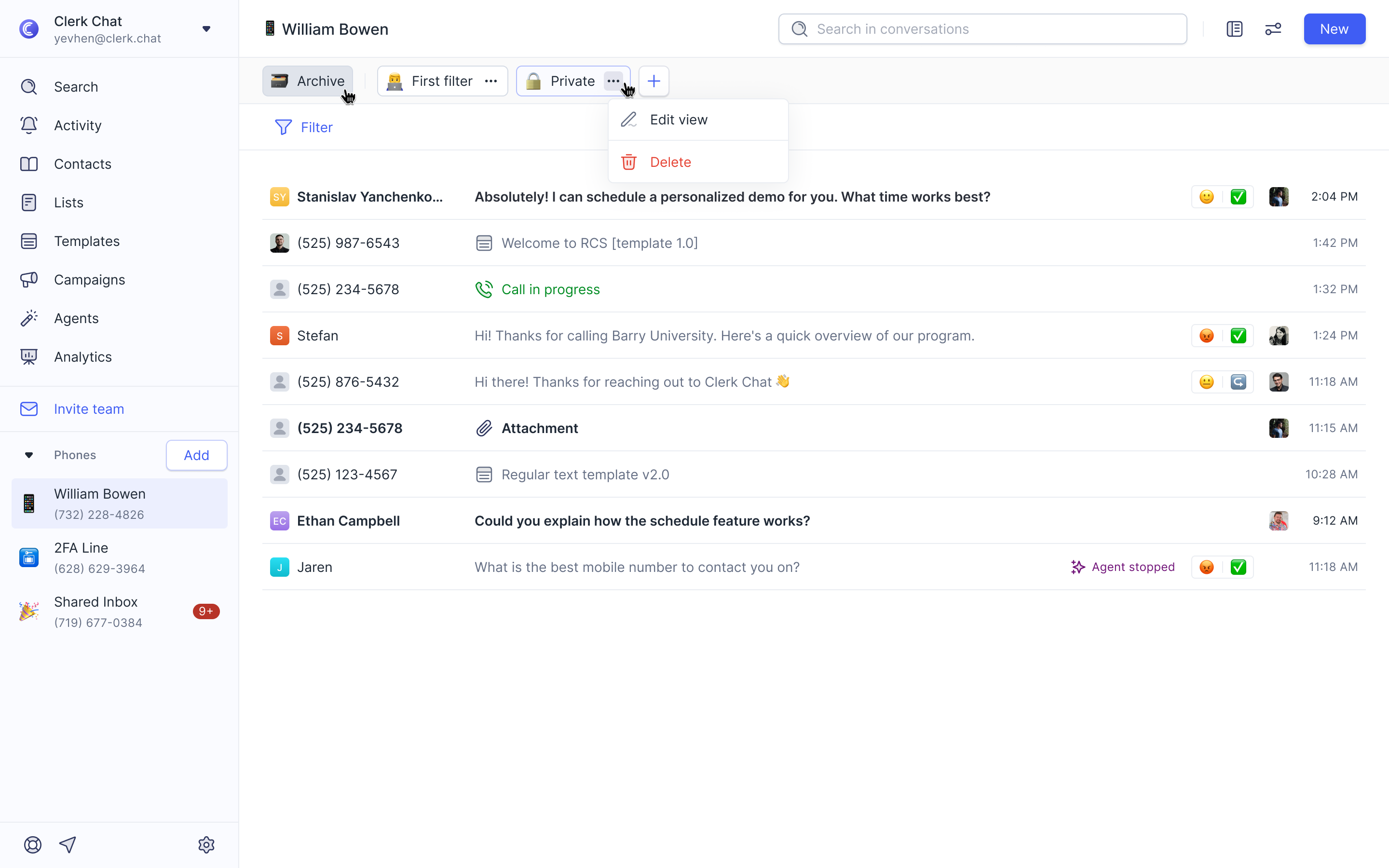
Introducing a completely new layout for viewing your conversations. This streamlined interface is optimized for managing large volumes of conversations, making it easier to navigate and review multiple chats at a glance.
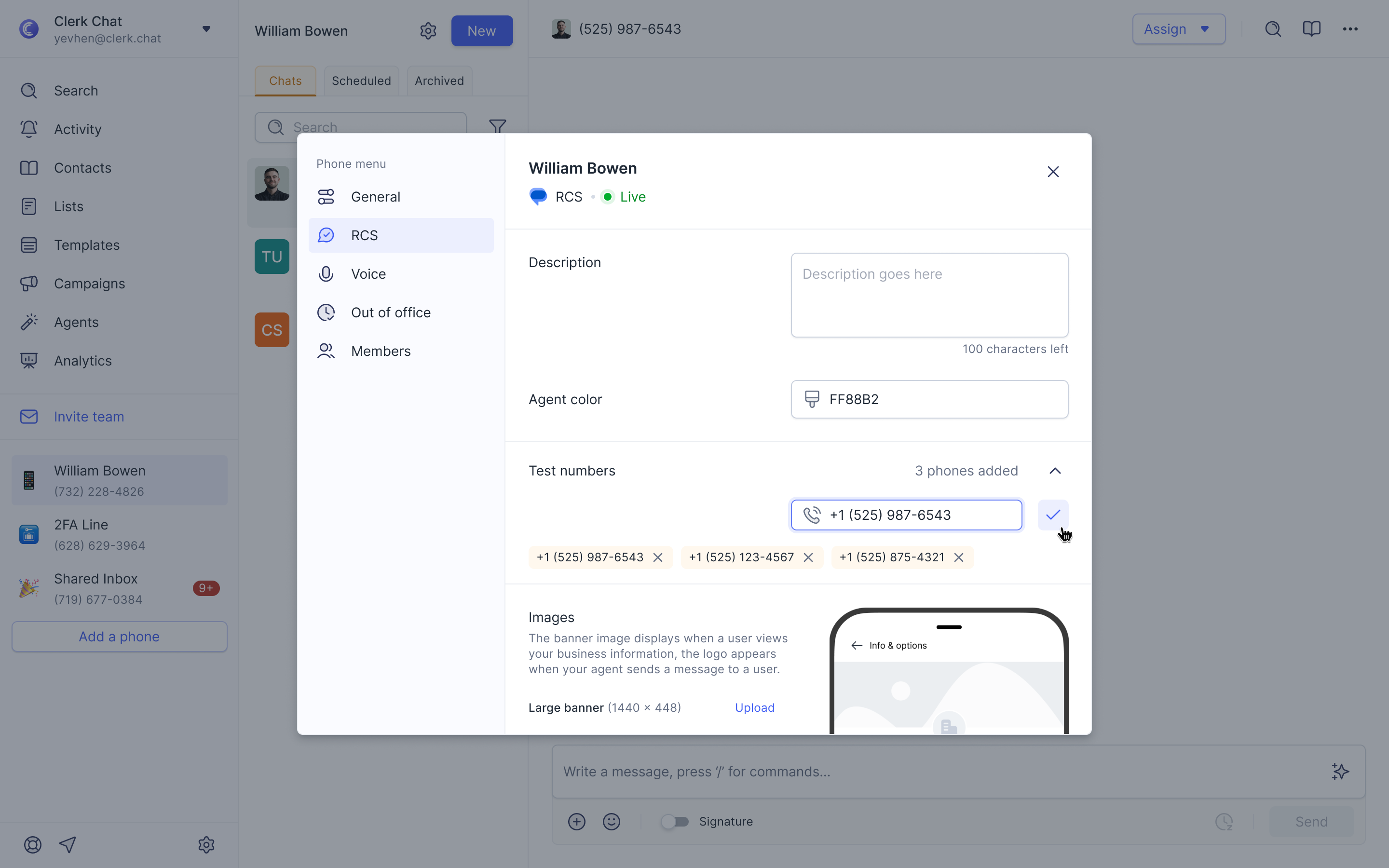
RCS Test Phone Numbers
Added the ability to add RCS test phone numbers directly in the UI, simplifying the testing and development workflow for RCS messaging.
Anthropic Models in Text AI
You can now use Anthropic's AI models directly within Text AI, expanding your options for AI-powered text generation and analysis.
Bug Fixes
Fixed an issue where edge filters were not working correctly for user message nodes in the agent designer.
January 17th, 2026
New
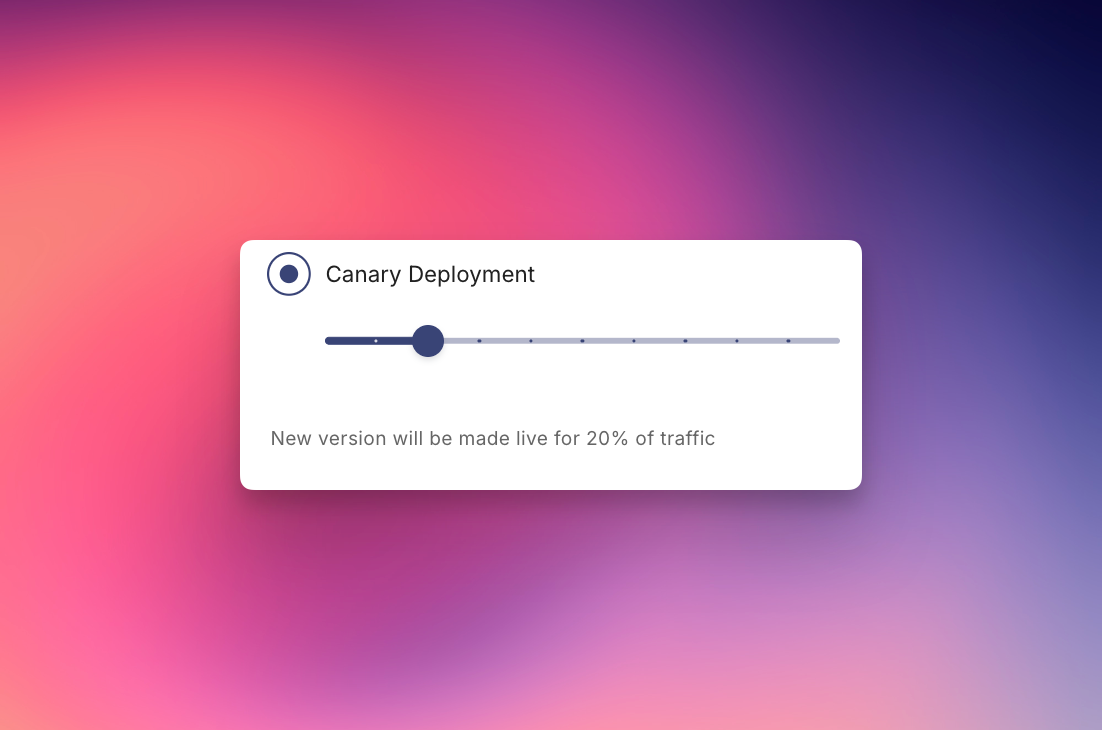
You can now choose how you want to roll out your agents with three deployment options:
Deploy for all users pushes your agent to 100% of traffic immediately—perfect for when you're ready to go fully live.
Staged Deployment lets you deploy to a specific phone number, so your agent only activates for calls or texts from that inbound number. Great for controlled testing with a specific audience.
Canary Deployment gives you a traffic percentage slider to gradually roll out your agent. Start at 10%, monitor performance, then scale up as you gain confidence.
January 16th, 2026
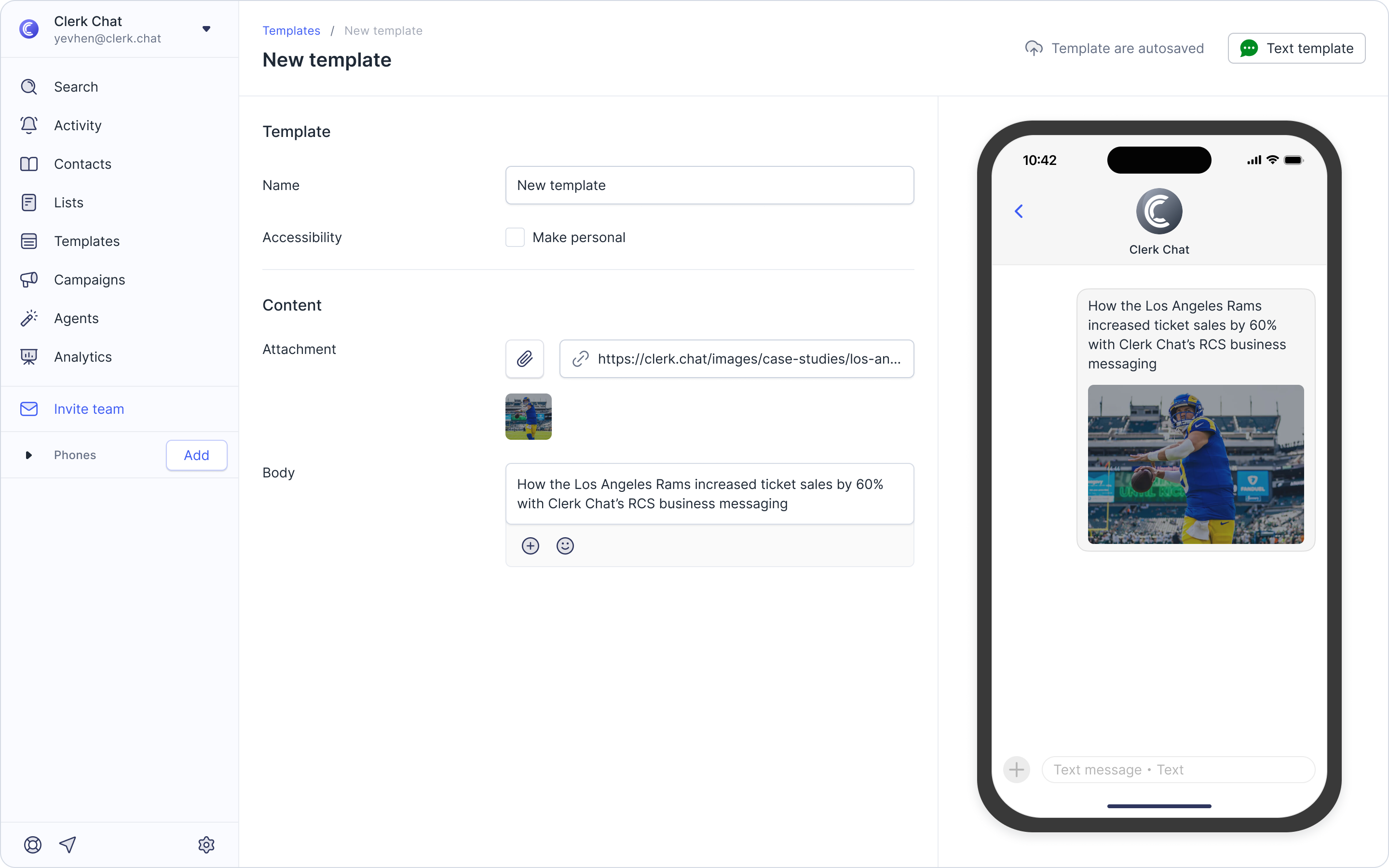
Include files directly in your saved text templates - think pricing sheets, lookbooks, welcome guides, claim forms, diagrams, and more!
Access the feature by clicking Templates in the sidebar and selecting +Add Template (top right). Choose Text Template and give it a name.
What’s New: In the Content section, click the paperclip icon to upload a file from your device.
January 7th, 2026
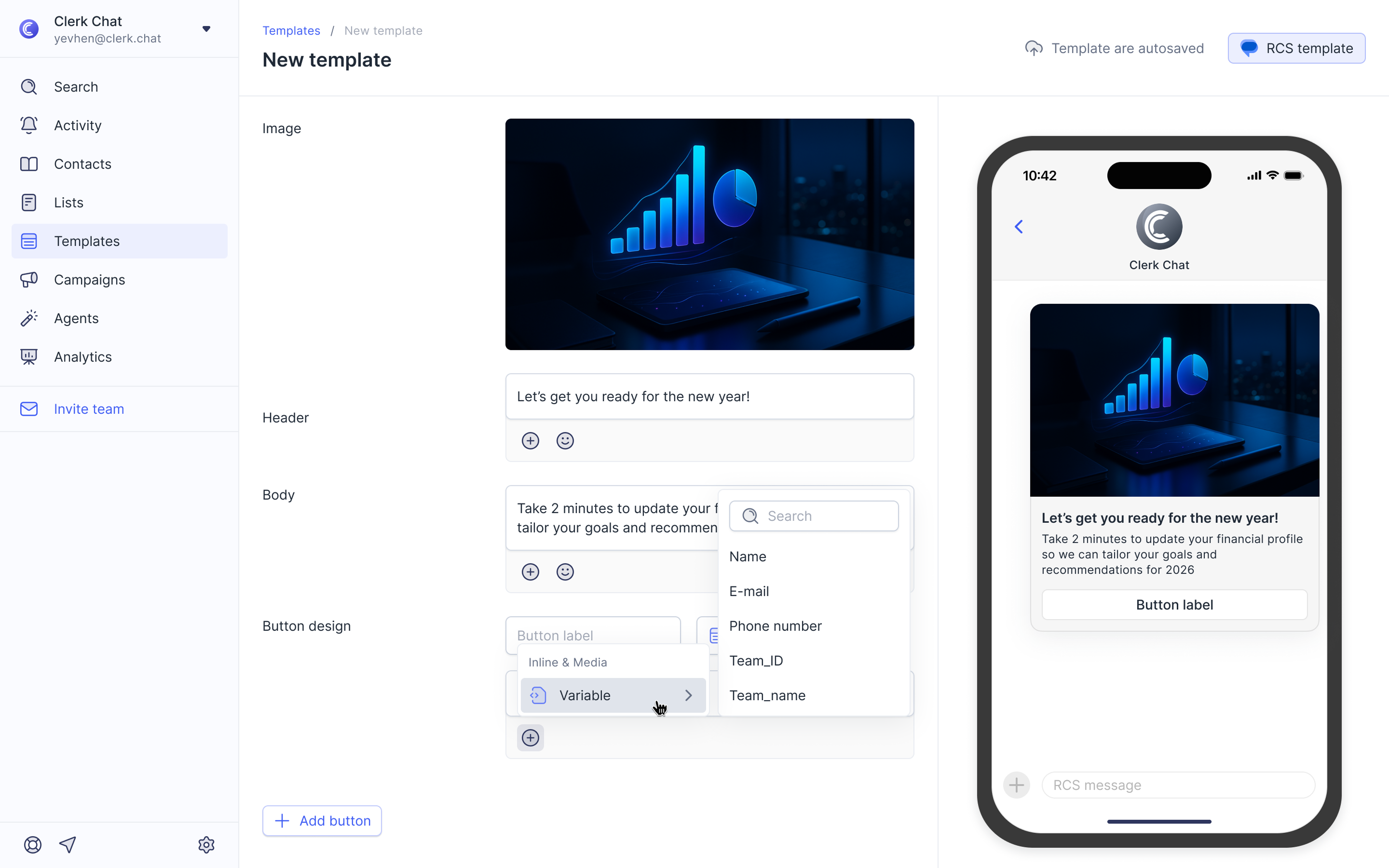
While you could already personalize headings and body text, this update allows you to insert dynamic data into button actions, such as "Open URL" or "Dial Phone Number."
Why would I use this feature? To completely personalize your campaigns. For example, an "Open URL" button can now point to a unique, personalized link for every recipient, making it easier to direct customers to their specific account pages, tracking links, or custom booking sites.